
 Deutsch
 English

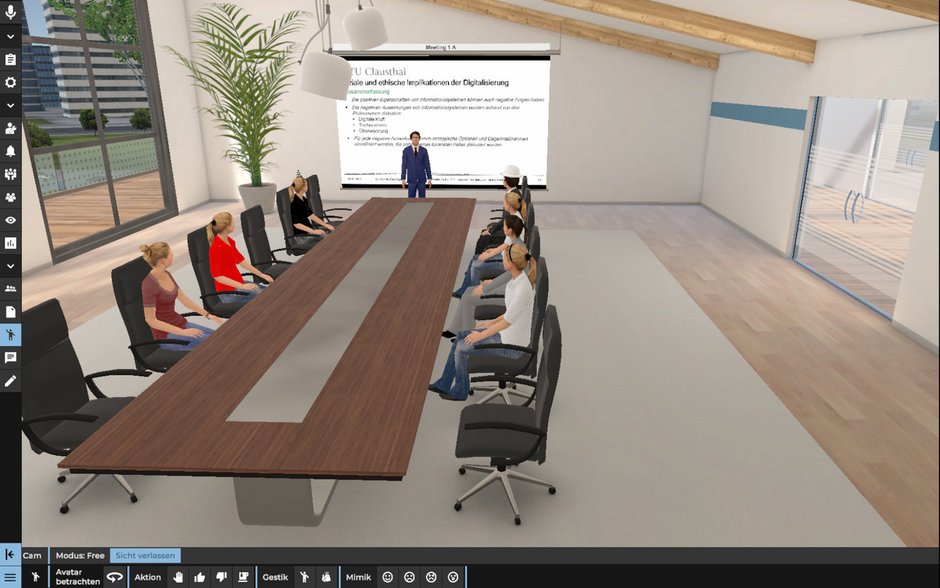
In the “Digital Entrepreneurship” course, Dr. Dennis Steininger taught students the specifics of digital entrepreneurship.
Marcel Heine from the Startup Service participated as a mentor, among other roles.
Participants in Dr. Dennis Steininger’s “Digital Entrepreneurship” course were able to directly apply the theoretical foundations of entrepreneurship in the digital space they learned during the lecture. The practical component began with the students developing their own business ideas and culminated in a presentation to a jury consisting of former founders and Marcel from the Startup Service. The goal was to win over the jury members with their pitches and thereby secure a fictional investment in their startup.
“Trying things out and experimenting within the context of startup projects, as well as learning to cope with time pressure and setbacks, is, in my view, an extremely valuable experience for the course participants’ future professional lives,” said Dr. Steininger regarding the nature of the event.
Due to the unique circumstances of the COVID-19 lockdown, the event—which centered entirely on digital entrepreneurship—took on a thoroughly digital format itself. Many of the students had never met in person, yet despite these circumstances, a wide variety of collaborative projects emerged. This was achieved, among other things, through the use of digital collaboration tools.
“In keeping with the course title, we experimented with a wide variety of digital collaboration methods. For example, the students took on the roles of avatars for teamwork in virtual reality,” Dr. Steininger reported regarding the new digital tools.
Three teams, three different business ideas
Team ATP developed a concept to prevent highway parking lots from becoming overcrowded with trucks. The goal is to intelligently route trucks using camera technology and AI. Team Viehlfalt, in turn, developed a platform concept that connects meat producers directly with end consumers. The focus here is on sustainability and a diverse product range. Team SmartTech, meanwhile, set out to reduce the volume of returns from large clothing mail-order companies. With the help of AI, the team plans to analyze shoppers’ clothing sizes and preferences and, based on this analysis, optimize shopping carts so that customers are shown only products that match their individual measurements and preferences.
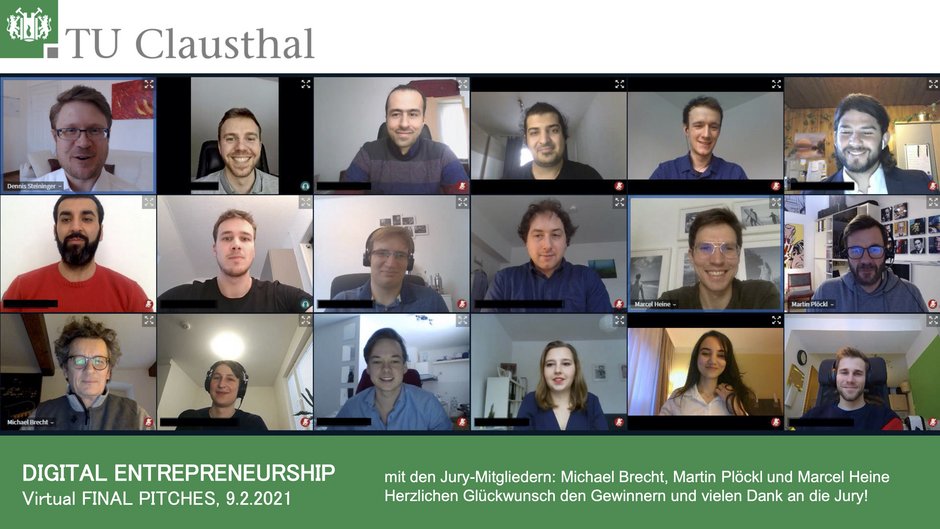
The event concluded with the individual teams’ pitches to a panel of experts. In addition to Marcel from the Startup Support team, two founders and investors from Augsburg served as jury members. With Michael Brecht (founder of several companies and former CEO of Doodle, among other roles) and Martin Plöckl (founder of Vitrato, which was later successfully sold to mobilcom/debitel), the ideas were evaluated by two experienced experts.
“By bringing together high-caliber judges and the Clausthal University Start-up Service,” explains Dr. Steininger, “we aim to support teams in such a way that they can continue to develop and implement their startup projects even beyond the course.”
At least one of the teams is now in active contact with the startup service
even after the lecture has ended and plans to further develop its own idea. The next round of this
successful event is eagerly anticipated.
Published on March 3
, 2021 Author: Marcel Heine